Blood in the urine
Gross, painless hematuria is described on the source page as the primary symptom in many newly diagnosed bladder tumour patients.


Uro-oncology is an important sub-speciality of urology dealing with the diagnosis and treatment of tumours of the genitourinary system, including prostate, kidney, testicular, bladder and penile cancers.
Genitourinary cancers form an important part of urinary tract diseases. The source website notes an increasing incidence and highlights the importance of diagnosis and treatment aimed not only at treating the disease but also at improving the patient's quality of life.
Many genitourinary cancers can now be treated using minimally invasive approaches such as laparoscopy or endoscopy.
Prostate cancer is a common cancer in men. Early disease may not cause symptoms, or symptoms may resemble benign prostatic hypertrophy (BPH). The source page describes evaluation by a urologist, including digital rectal examination and serum PSA, with biopsy when indicated.
For confirmed cancer, treatment may include surgery, radiation therapy or medication depending on the stage. The website describes radical prostatectomy for men with early prostate cancer who are otherwise fit and have an appropriate life expectancy.
Gross, painless hematuria is described on the source page as the primary symptom in many newly diagnosed bladder tumour patients.
Most bladder tumours described on the source page are urothelial carcinomas, previously known as transitional cell carcinoma.
Bladder tumours may be classified according to whether the muscle layer is involved. Muscle-invasive disease requires more aggressive treatment.
The source page identifies radical cystectomy as the gold-standard treatment for muscle-invasive bladder cancer, with other treatments considered according to local staging.
Ureteric and renal pelvic tumours are uncommon urological cancers. The source page explains that they are usually transitional cell carcinomas similar to bladder cancer and may present with haematuria or flank pain.
For large, high-grade or suspected invasive tumours of the renal pelvis and proximal ureter, radical nephroureterectomy with excision of a bladder cuff is described as the gold-standard treatment. The page also notes that this can be performed laparoscopically by a qualified urologist and that regular follow-up is required.
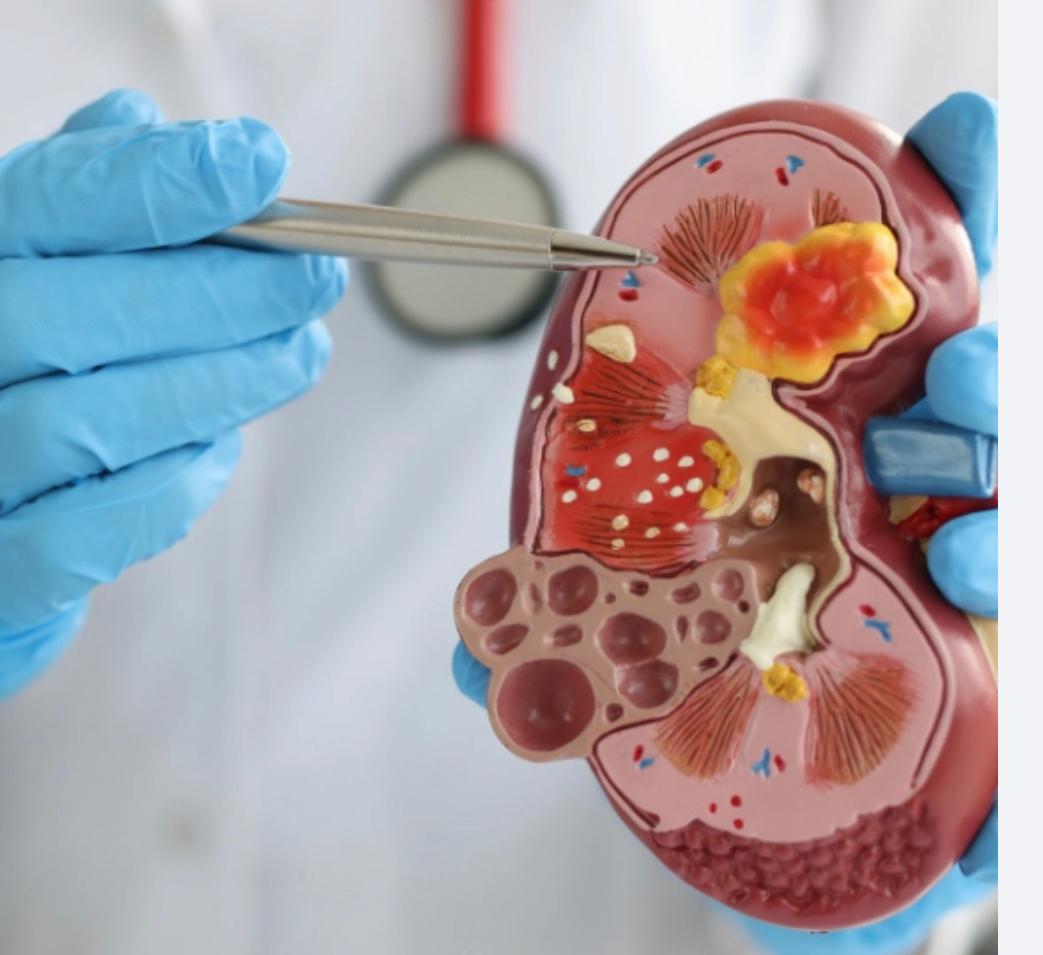
Renal cell carcinoma is described on the source page as the most common type of kidney cancer in adults. It begins in the cells of the kidney, and other less common kidney cancers can also occur.
Because of the kidney's retroperitoneal location, many kidney masses can remain asymptomatic until locally advanced. The website notes that the wider use of CT and other non-invasive imaging has led to many kidney cancers being detected incidentally, often when tumours are small and confined to the kidney.